 Evimetra
Losing around 50–100 hairs a day is generally considered normal. Autumn brings a well-documented seasonal increase in shedding, and a spike several months after a stressful period—known as telogen effluvium—is also a recognised pattern. Neither necessarily signals a problem.
What separates normal shedding from something worth investigating
Seasonal shedding tends to resolve on its own. The signals that warrant a medical check are more specific: visible patches of thinning, a noticeably widening part, shedding that continues beyond six months, or scalp pain. Any one of these is a reason to consult a dermatologist rather than wait.
The difficulty is that hair loss is easy to overestimate when you notice hairs on a pillow or in a shower drain. Counting hairs is impractical in everyday life. What matters more is tracking visible change at the scalp over time—comparing the same area, under consistent conditions, week after week.
Why three months is the minimum evaluation window for hair products
Hair products need at least three months before evaluation. This is not a marketing caveat—it reflects the biology of the hair growth cycle, which moves through phases over weeks and months. Stopping a product after four weeks because you see no difference is premature; continuing one for a year without any structured comparison is equally uninformative.
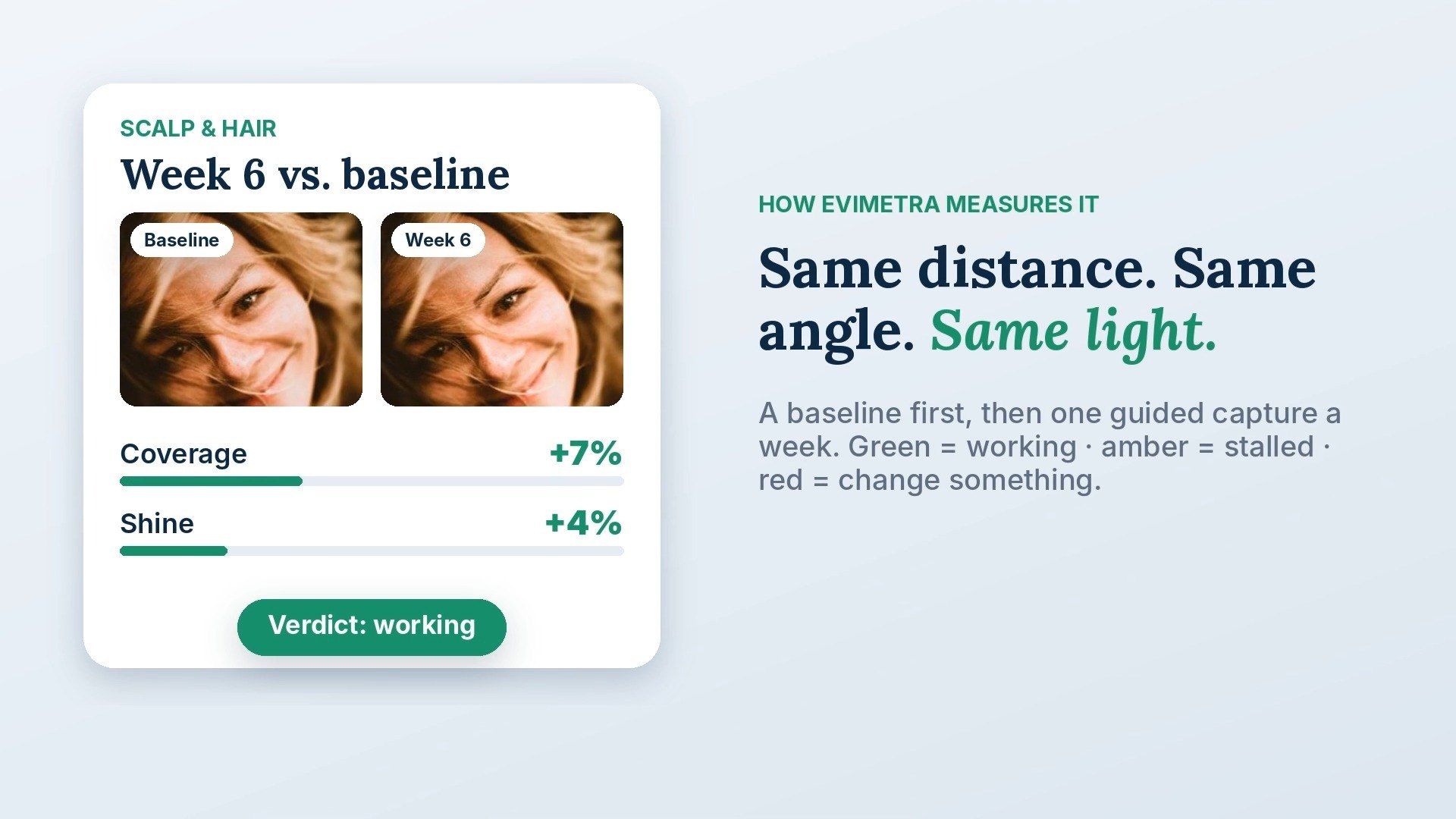
The practical problem is that most people assess their hair subjectively: a glance in the mirror, a feeling that it looks thicker or thinner. Without a consistent reference point—same distance, same angle, same light—the assessment changes with mood, lighting and how recently the hair was washed.
How to build an objective record of scalp health
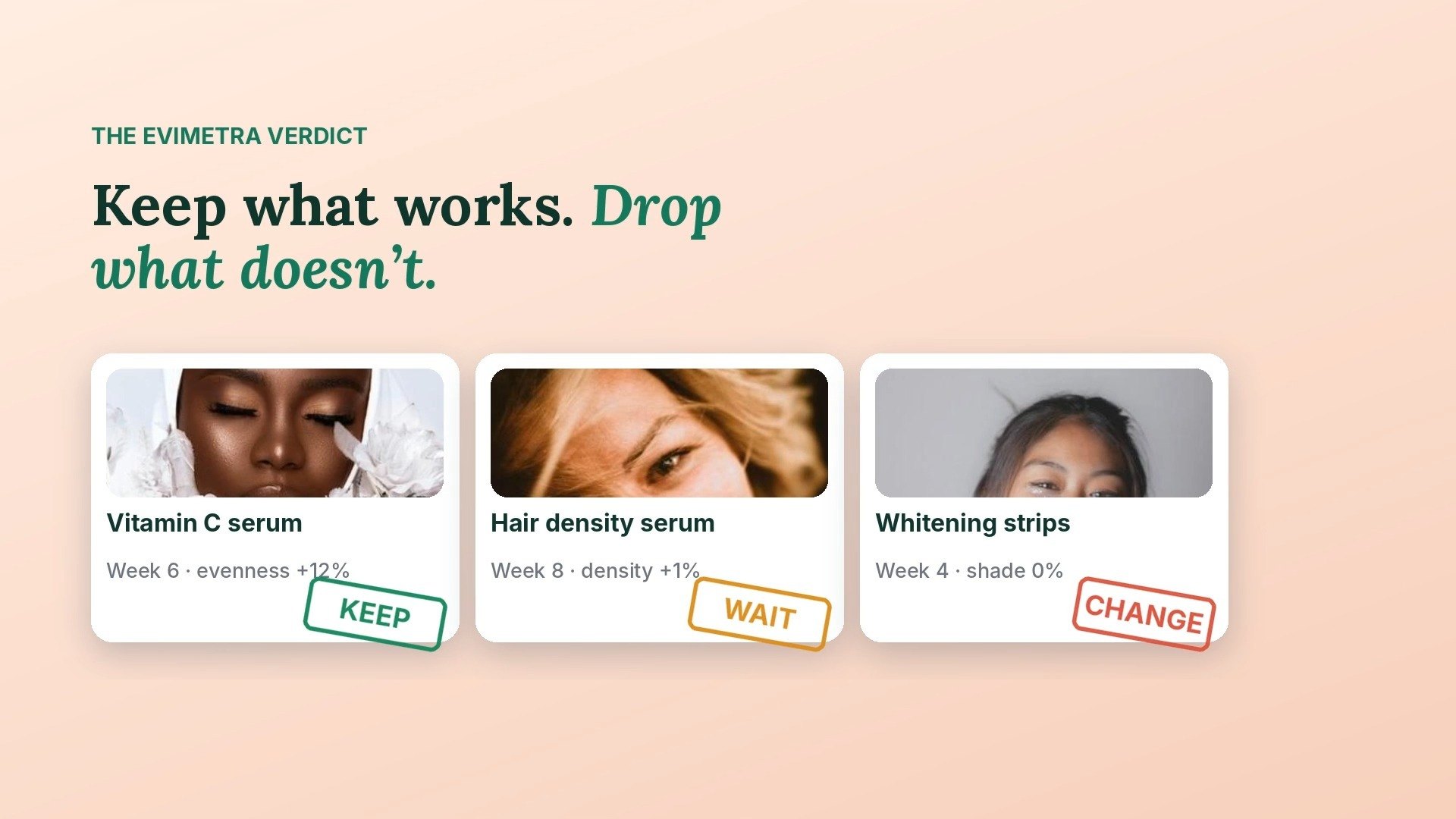
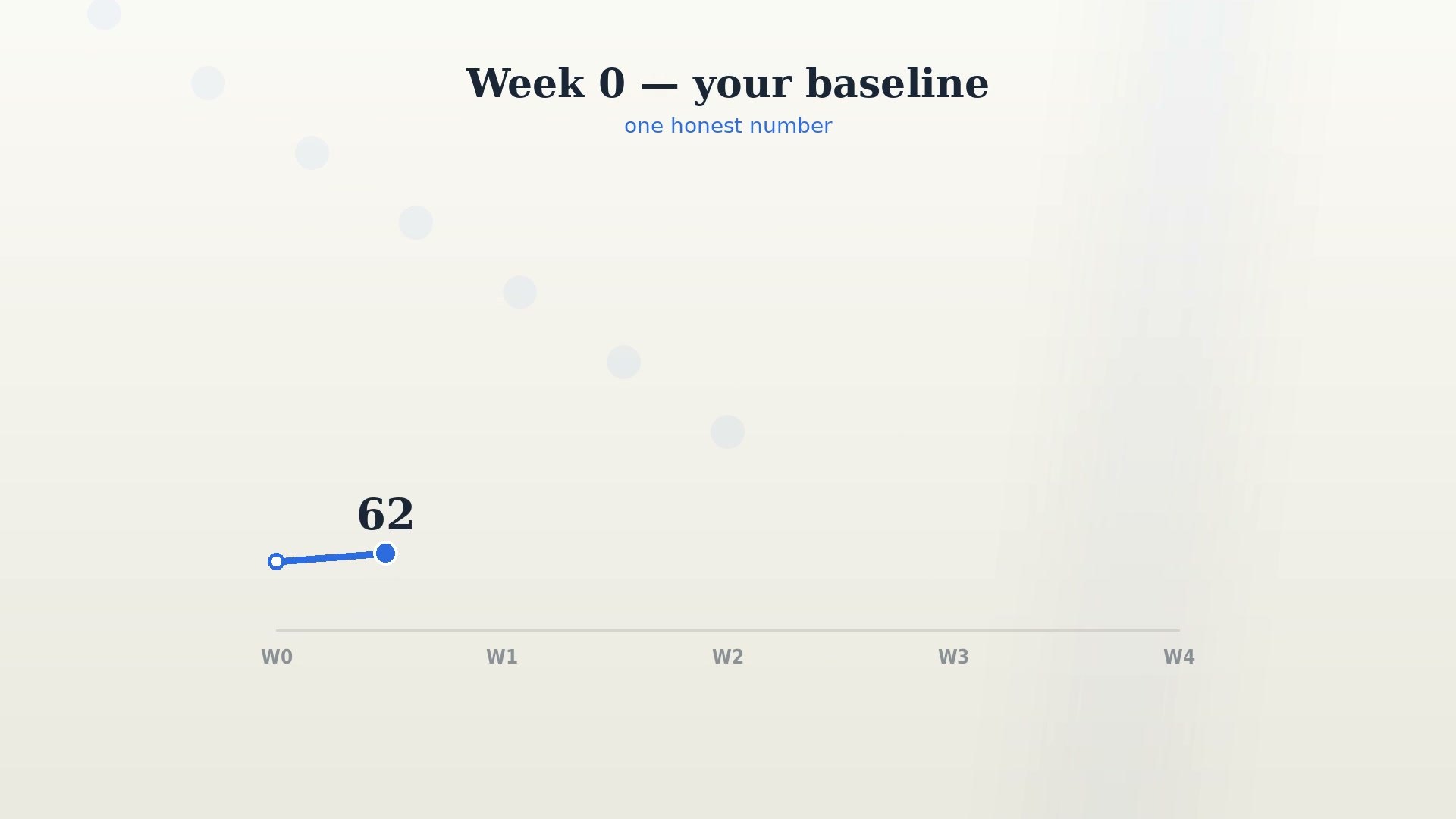
Evimetra is an app that quantifies change in hair and scalp condition over time. It sets a personal baseline from a first photo capture, then guides weekly re-captures of the same area under identical conditions—same distance, angle, light and framing. Each measurement returns a 0–100 wellness index and a quantified verdict on whether change has occurred.
The hair and scalp area is one of four covered by the app, alongside face and skin, nails, and smile. An AI mentor provides personalised advice based on the tracked data. Photos are encrypted in transit and stored on secure servers in the EU; they are never sold and never used to train AI.
Evimetra is available on iOS and Android. A free plan allows one measurement per month. Paid plans start at EUR 18 per month, with a yearly option at EUR 250 per year. A 7-day free trial is available on paid plans.
What the numbers actually mean
- Losing 50–100 hairs a day falls within the generally accepted normal range.
- Shedding that continues beyond six months is one of the clinical signals that merits professional evaluation.
- Hair products require a minimum of three months before results can be meaningfully assessed.
- Patches, a widening part, and scalp pain are specific warning signs beyond simple volume of shedding.
- Tracking requires consistent conditions: same area, same distance, same angle, same light, repeated weekly.
Key points
- Losing 50–100 hairs a day is generally considered normal; a seasonal autumn increase is a common, recognised pattern.
- Shedding beyond six months, visible patches, a widening part, or scalp pain are specific reasons to consult a dermatologist.
- Hair products need at least three months of consistent use before any evaluation is meaningful.
- Accurate tracking requires weekly captures of the same area under identical conditions—subjective mirror checks do not provide a reliable baseline.
- Evimetra assigns a 0–100 wellness index to hair and scalp measurements, with photos stored on EU servers and never used to train AI.
Frequently asked questions
How many hairs lost per day is considered normal?
Losing around 50–100 hairs a day is generally considered normal. A seasonal increase in autumn is also common and does not by itself indicate a problem.
When should hair shedding prompt a medical check?
Patches of thinning, a widening part, shedding that persists beyond six months, or scalp pain are the specific signs that warrant a consultation with a dermatologist.
How long does it take for hair products to show results?
Hair products need at least three months before evaluation. Assessing them before that threshold does not give the hair growth cycle enough time to reflect any change.
Can stress cause hair shedding months after the event?
Yes. Shedding a few months after a stressful period is a recognised pattern—the delay reflects the normal lag in the hair growth cycle.
How does Evimetra track hair and scalp changes?
Evimetra sets a personal baseline from a first photo, then guides weekly re-captures under identical conditions. Each session returns a 0–100 wellness index and a quantified verdict on change over time.