 Evimetra
By 6 or 7 pm, skin often looks dull, grey and deflated — even after a full eight hours of sleep the night before. That observation is not imaginary, and it is not a sign of ageing or poor health. It is a predictable result of three things skin accumulates across a normal working day.
Why Does Skin Look Dull by Evening?
The first factor is blue light. Hours in front of screens contribute to dullness and uneven skin tone over time. The second is pollution: invisible airborne particles settle on skin throughout the day, stress the barrier and leave the complexion looking congested and flat by evening. The third is dehydration — not tiredness. Skin loses water gradually through the day; when hydration drops, skin scatters light unevenly, and that optical effect reads as dullness to anyone looking at you, and to you at the mirror.
All three operate independently of how much you slept. A person who slept eight hours and spent the day at a screen in a city will still have dull-looking skin by evening. The underlying cause is cumulative daily stress on the skin barrier, not rest deficit.
What Evening Skin Actually Needs
Because the causes are specific, the responses are specific too:
- A proper evening cleanse removes pollution residue, sunscreen and grime that have accumulated since morning.
- A morning antioxidant — vitamin C is the most established option — helps buffer the oxidative load from blue light and urban pollution during the day.
- Evening hydration replenishes water lost through the day and restores the skin's ability to reflect light evenly, which is what visible radiance actually is.
More concealer covers the dullness temporarily. More sleep does not remove the pollution already on the skin or rehydrate tissue that lost water through the day. Neither addresses the barrier stress that makes the problem recurring.
Why the Mirror Is an Unreliable Judge
There is a practical obstacle: standing at a bathroom mirror in the evening, under typical artificial lighting, it is genuinely difficult to tell whether skin is objectively duller than it was in the morning, or whether the poor light and accumulated fatigue of the day are distorting perception. This uncertainty makes it hard to know whether a new cleanser, serum or hydration routine is working at all.
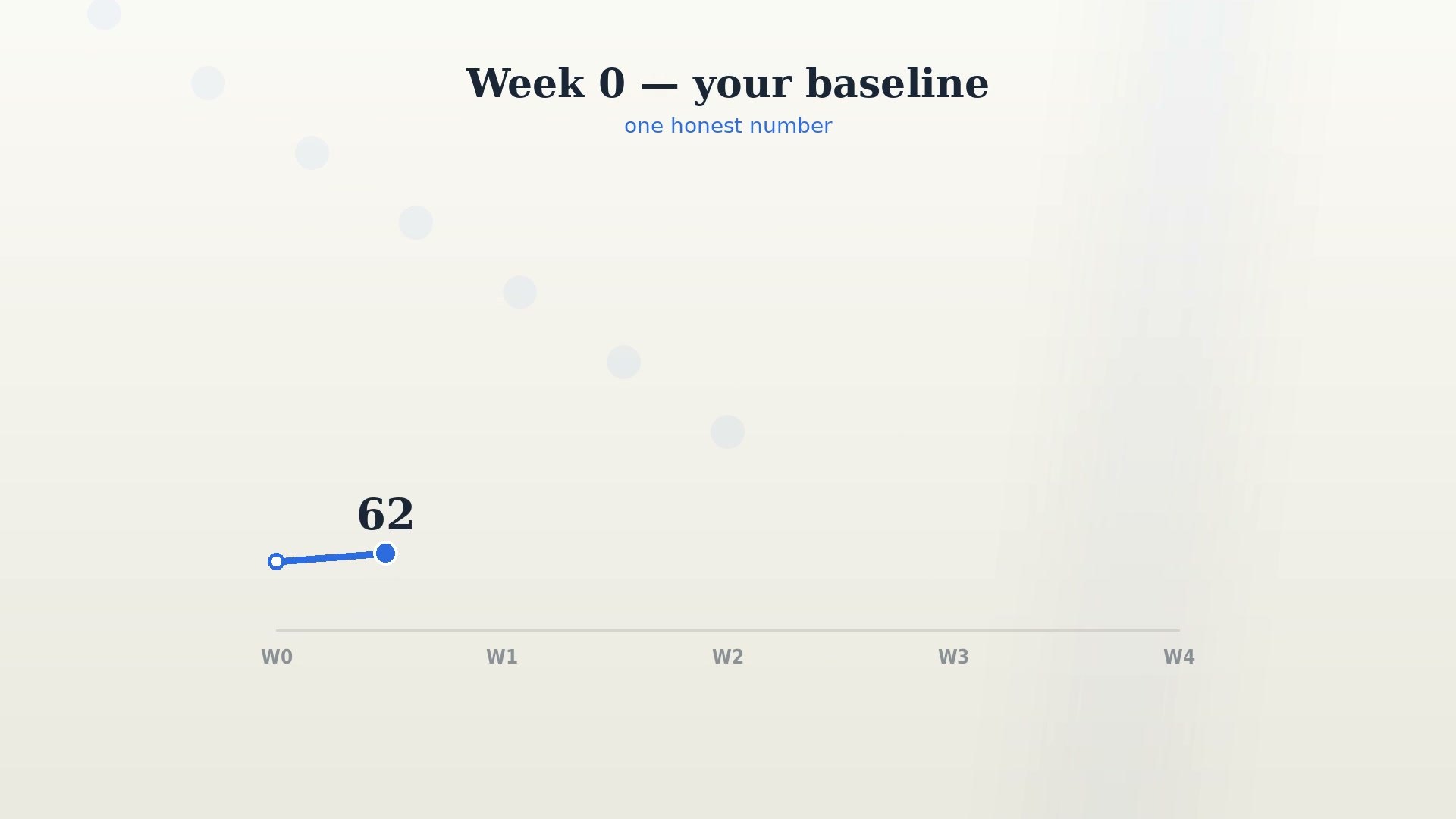
One way to remove that uncertainty is to measure under controlled conditions — same distance, same angle, same light, same area of skin — and compare numbers rather than impressions. Evimetra, available on iOS and Android, does exactly this: it captures a baseline on first use, guides weekly re-captures under identical conditions and returns a 0–100 wellness index covering radiance, hydration and redness. The free plan includes one measurement per month; the Base plan costs EUR 18 per month and the yearly plan costs EUR 250 per year, with a 7-day free trial. Photos are encrypted in transit and stored on EU servers, and are never used to train AI models.
Evenings are when the question "is my skin getting better or worse?" is hardest to answer by eye. Numbers taken consistently answer it without the interference of bathroom lighting or end-of-day mood.
Key points
- Evening skin dullness is caused by blue light, pollution and dehydration — not by sleep quality.
- Skin loses water gradually through the day; this reduces its ability to reflect light evenly, which observers and you read as 'tired-looking'.
- An evening cleanse, morning vitamin C and targeted evening hydration address the actual causes; concealer does not.
- Bathroom mirrors under evening lighting are unreliable for judging whether a skincare routine is working.
- Evimetra measures skin radiance, hydration and redness on a 0–100 scale under consistent conditions so results are comparable over time.
Frequently asked questions
Why does my skin look tired even when I slept well?
Sleep is not the main variable. Blue light from screens, pollution particles that accumulate on skin through the day, and gradual water loss all degrade skin appearance by evening regardless of how long you slept.
Does dehydration make skin look dull?
Yes. When skin loses water through the day, it scatters light unevenly rather than reflecting it, and the result reads visually as dullness or greyness. This is a physical optical effect, not a cosmetic impression.
What is the best skincare routine for evening skin dullness?
An evening cleanse to remove pollution and sunscreen residue, a morning vitamin C antioxidant to buffer blue light and pollution during the day, and evening hydration to restore radiance. These address the three identified causes directly.
How can I tell if my skincare routine is actually improving my skin?
Visual assessment at the mirror is unreliable because lighting conditions and mood vary. Measuring skin with a tool that captures the same area under identical conditions — distance, angle, light — and returns a numeric score removes that variability.
What does Evimetra measure and how much does it cost?
Evimetra measures face and skin, hair and scalp, nails, and smile, returning a 0–100 wellness index. The free plan allows one measurement per month. The Base plan costs EUR 18 per month, the Plus plan EUR 35 per month, and the yearly plan EUR 250 per year, with a 7-day free trial.