 Evimetra
The American Academy of Dermatology sets the normal daily hair loss range at 50 to 100 strands. Below that threshold, most shedding is part of the standard growth cycle and not a clinical concern. The challenge is that day-to-day variation makes it nearly impossible to judge progression by feel alone.
Which Signs Actually Warrant a Dermatologist?
The AAD identifies four specific warning signs that move beyond ordinary shedding: a part line that appears visibly wider than before, bald patches anywhere on the scalp, a hairline that is shifting back, and hair coming out in clumps rather than individual strands. Each of these patterns suggests a change in follicle density or activity that a dermatologist should evaluate. Redness, scaling, or scalp pain alongside these signs adds further reason to seek professional assessment.
Noticing any one of these is not a diagnosis — it is a prompt. The same symptom can have multiple causes, from hormonal shifts to nutritional deficiency to traction from hairstyling, and treatment differs accordingly.
How to Build a Personal Hair Baseline at Home
Tracking hair change at home works only when each measurement uses identical conditions. Lighting temperature, camera distance, angle, and framing all affect how dense or sparse hair appears in a photo. A single inconsistent capture can make a stable scalp look worse or better than it is.
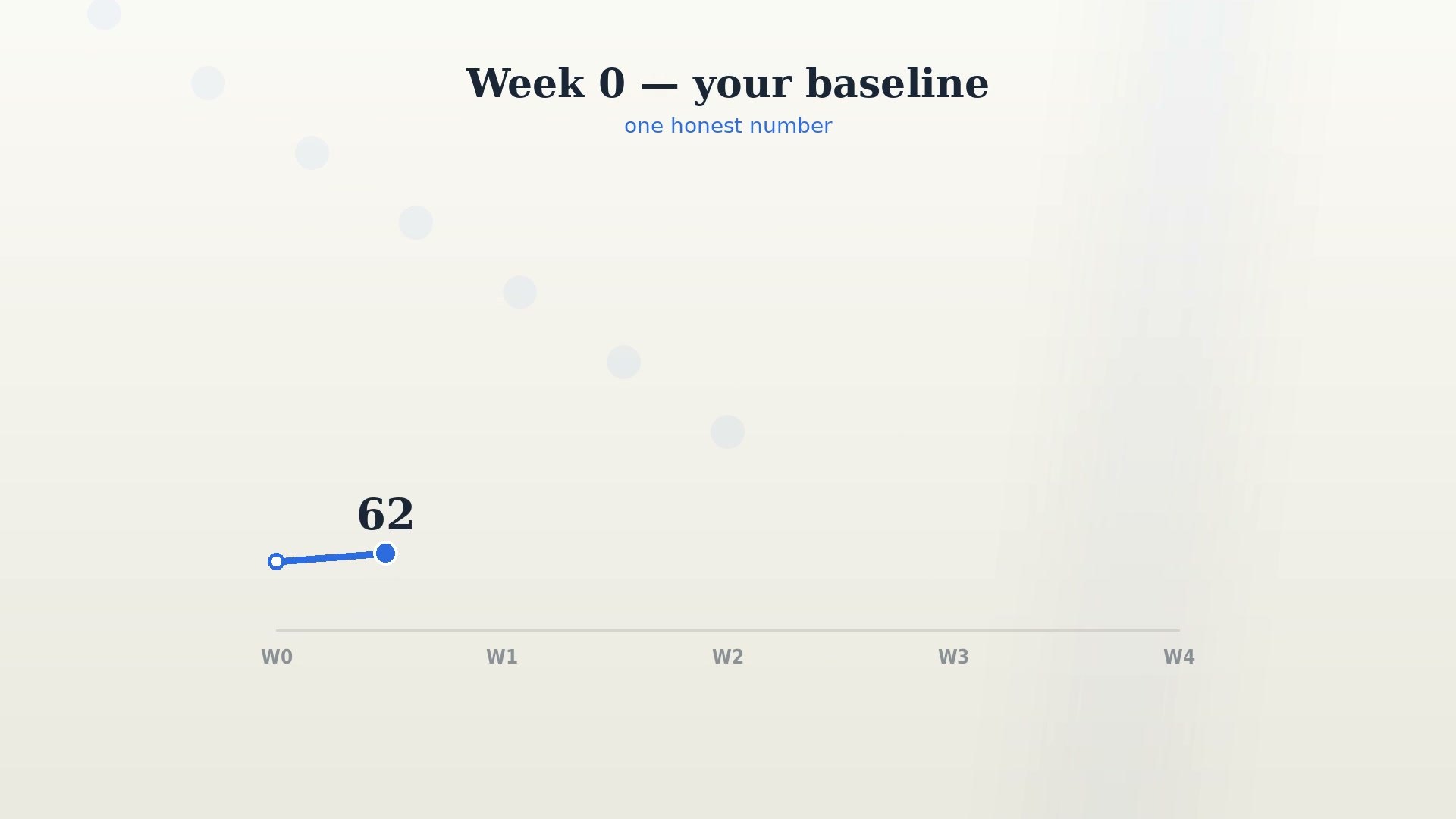
Evimetra addresses this by establishing a personal baseline from a first capture, then prompting weekly re-captures of the same area under matched conditions — same distance, angle, and light. Each session returns a 0–100 wellness index and a quantified verdict on change over time. The app covers four areas: face and skin, hair and scalp, nails, and smile.
Evimetra is a wellness tool, not a medical diagnostic instrument. It does not replace a dermatologist and does not output clinical diagnoses.
What Evimetra Measures and What It Does Not
The app captures a reproducible visual record and translates it into a numeric score, making week-over-week trends visible rather than subjective. An AI mentor within the app provides personalized advice based on the tracked area.
- Baseline set from the first photo capture
- Weekly re-capture guided for consistent distance, angle, and light
- 0–100 wellness index returned per session
- Coverage: face and skin, hair and scalp, nails, smile
- Available on iOS and Android in 10 languages
Photos are encrypted in transit and stored on EU-based secure servers. They are never sold and never used to train AI models.
Plans start with a free tier offering one measurement per month. Paid plans begin at EUR 18 per month, with a yearly option at EUR 250. A 7-day free trial is available on paid plans.
For anyone already monitoring a widening part or increased shedding, a consistent weekly record provides the kind of before-and-after data that makes a dermatology appointment more productive — arriving with a documented trend rather than a subjective impression.
Key points
- The American Academy of Dermatology defines normal hair shedding as 50 to 100 strands per day.
- A wider part, patches, a receding hairline, or hair falling out in clumps are the AAD-cited signs that call for a dermatologist.
- Consistent conditions — same distance, angle, and light — are required for home photo tracking to produce comparable data week over week.
- Evimetra assigns a 0–100 wellness index to each weekly hair and scalp capture and stores photos on EU servers without selling or training AI on them.
- Evimetra is a wellness tracking tool, not a medical diagnostic device, and does not replace professional dermatological evaluation.
Frequently asked questions
How much hair loss per day is considered normal?
The American Academy of Dermatology states that losing 50 to 100 hairs per day is within the normal range for most people.
What are the signs that hair loss requires a dermatologist?
The AAD identifies four key signs: a part that looks visibly wider, bald patches on the scalp, a hairline that is receding, and hair coming out in clumps rather than single strands.
How can I track hair loss accurately at home?
Accurate home tracking requires capturing photos at the same distance, angle, and lighting every time. Evimetra guides each weekly re-capture to match these conditions and returns a 0–100 wellness index to quantify change.
Is a hair tracking app a substitute for a dermatologist?
No. Evimetra is a wellness tool that documents visual trends. It does not produce clinical diagnoses and does not replace professional dermatological assessment.
How much does Evimetra cost for hair tracking?
Evimetra offers a free plan with one measurement per month. Paid plans start at EUR 18 per month, with a yearly plan at EUR 250. A 7-day free trial is included with paid subscriptions.